
What is a Celebration of Life?
A Complete UK Guide
From what a celebration of life is to planning the special day
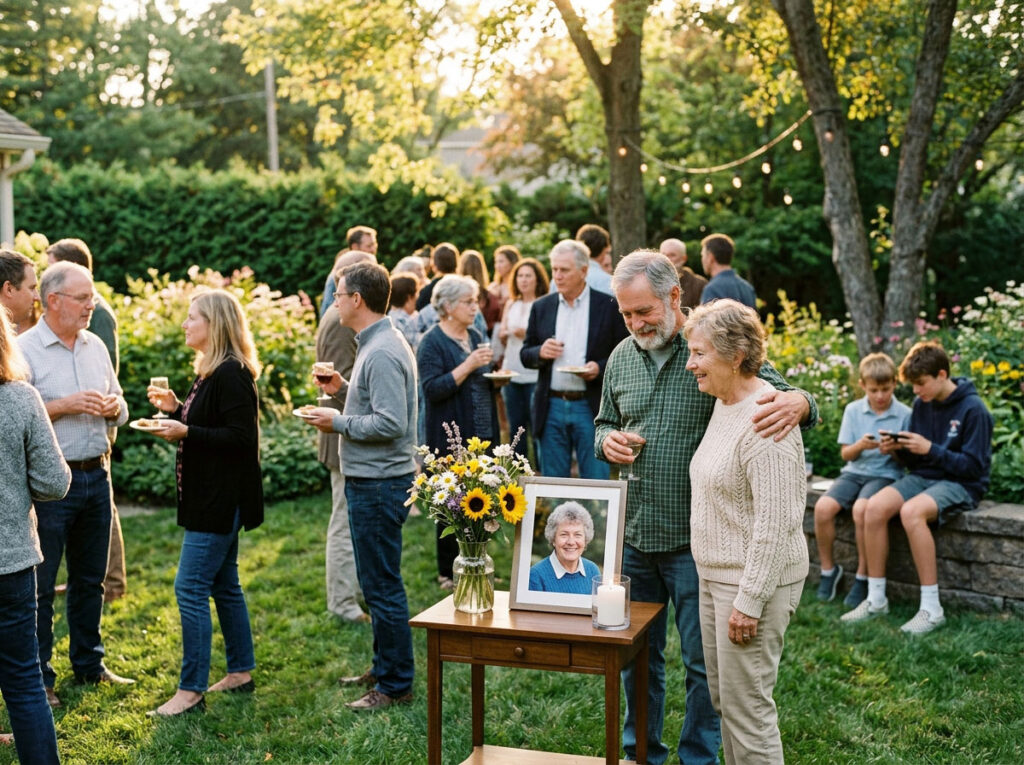
Something is quietly shifting in the way we say goodbye. Across the UK, more and more families are stepping away from the rigid formality of traditional funerals and choosing instead to honour their loved ones through a celebration of life. A gathering that feels less like a ceremony to get through, and more like an occasion that truly reflects who that person was.
If you have been asked to help plan one, or are simply trying to understand what it involves, this guide will walk you through everything. What a celebration of life actually is, how it compares to a traditional funeral, what to include, and how to create something that people will carry with them long after the day is over.
What is a Celebration of Life?
A celebration of life is a memorial service that centres on who someone was, rather than solely on the fact that they have gone. The focus shifts from mourning a loss to honouring a person’s character, passions, relationships, and legacy. The tone is warmer and more personal. There is usually more laughter, more storytelling, and more space for people to feel a genuine connection to the person being remembered.
The Statisitics
According to SunLife’s 2025 Cost of Dying Report, 58% of UK funerals were described as a celebration of life, up from 51% the year before. That figure has risen by 27% since 2017. This is no longer a niche alternative. It is now the most common type of send-off
in the country.
A 2024 report by Co-op Funeralcare found that 68% of people now believe a funeral should be more of a celebration than a time of reflection, up from 58% in 2019. The way Britain says goodbye has changed significantly, and continues to change.
How it differs from a traditional funeral
The difference lies in both tone and structure. A traditional funeral tends to follow an established format, often rooted in religious ritual, held in a church or crematorium, and focused on mourning and farewell. It usually takes place within a few days of the death.
A celebration of life is far more flexible. There is no prescribed order, no requirement for a religious setting, and no need for the body to be present. It can take place anywhere from a favourite pub or garden to a gallery or parkland. It can happen days, weeks, or even months after the death, giving families the time and space to plan something genuinely meaningful rather than rushing whilst in shock.
Some of the most common differences include:
- Dress codes that invite colour rather than black, often the deceased’s favourite shade
- Personal music choices, from favourite albums to songs that prompt a knowing smile
- Venues chosen for their meaning rather than their formality
- Storytelling from those who knew the person, not just a formal eulogy
- Photo displays, slideshows, and memory tables
- An atmosphere that makes space for both laughter and tears
Why more families are choosing this approach
Part of the shift is cultural. As religious affiliation declines and conversations around death become more open, families feel freer to shape a send-off around the individual rather than tradition. People are researching their options, speaking to celebrants, and arriving with clear ideas about what they want.
Part of it is also deeply practical. For families who choose a direct cremation or unattended committal, a separate celebration of life later gives everyone the chance to gather, grieve together, and share memories without the constraints of a crematorium slot. It separates the private moment of farewell from the wider community gathering, and allows both to be what they need to be.
And part of it is simply that it feels right. A celebration of life honours the whole of a person, not just the fact that they are gone. For many families, that is the most important thing of all.
What to Include in a Celebration of Life
There are no rules, which is both the beauty and the challenge of planning a celebration of life. Here are some elements that families often find meaningful:
Personal music
Whether it is a favourite album played softly on arrival, a song that captures exactly who someone was, or an invitation for guests to suggest tracks beforehand, music is one of the most powerful ways to bring a person into the room.
Storytelling and open sharing
Rather than a single eulogy, many celebrations of life invite multiple people to share short memories or anecdotes. Some families create a prompt on a table card encouraging guests to write down their favourite memory and leave it in a bowl. Others have an open microphone moment. Both approaches often produce the most unexpected and treasured moments of the day.
Photo displays and memory tables
A display of photographs spanning a life gives guests something to gather around, to talk about, and to remember. Some families also include objects that meant something to the person: a favourite book, a well-worn tool, a sporting item, a small collection. These details bring the person into the space in a way that no formal reading can quite replicate.
A thoughtful order of service or welcome booklet
Even the most informal gathering is given warmth and intention when guests arrive to find something beautiful in their hands. A personalised order of service or celebration booklet does more than guide people through the day. It becomes a keepsake. Something to place in a drawer and return to. A tangible piece of a day that cannot be replicated.
The same applies to memorial cards, bookmarks, and thank you cards sent in the weeks following. Each item, when designed with care and cohesion, becomes part of a small collection that honours a life with the attention it deserves.
What Stationery Do You Need for
a Celebration of Life?
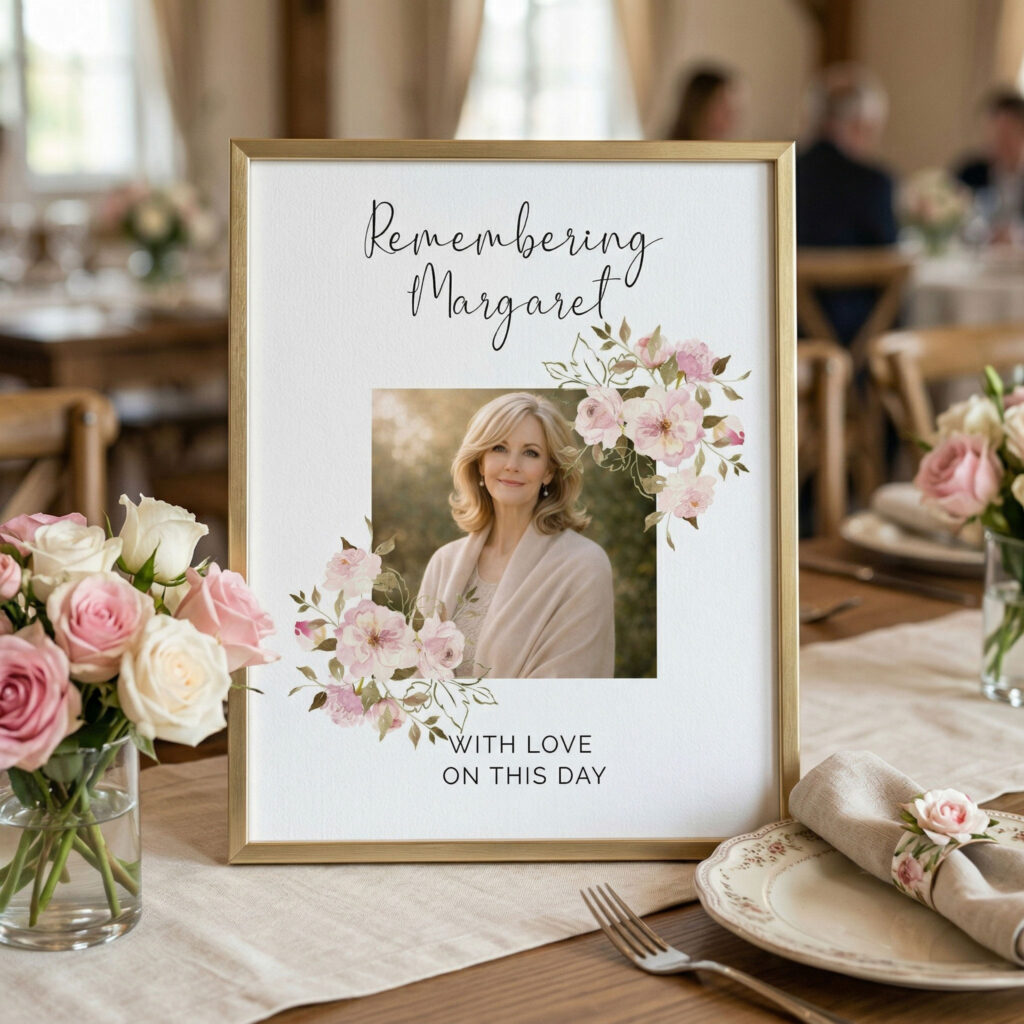
Because celebrations of life are often held in informal venues and have a more personal tone, the stationery you choose carries a different kind of weight. It does not need to look like a formal funeral programme. It can reflect the person being celebrated: their favourite colours, a motif they loved, a photograph that captures them exactly as those who knew them will remember.
Families planning a celebration of life often find that they want some or all of the following:
*A personalised welcome booklet or order of service, reflecting the tone and personality of the day
*A welcome sign at the entrance to the venue
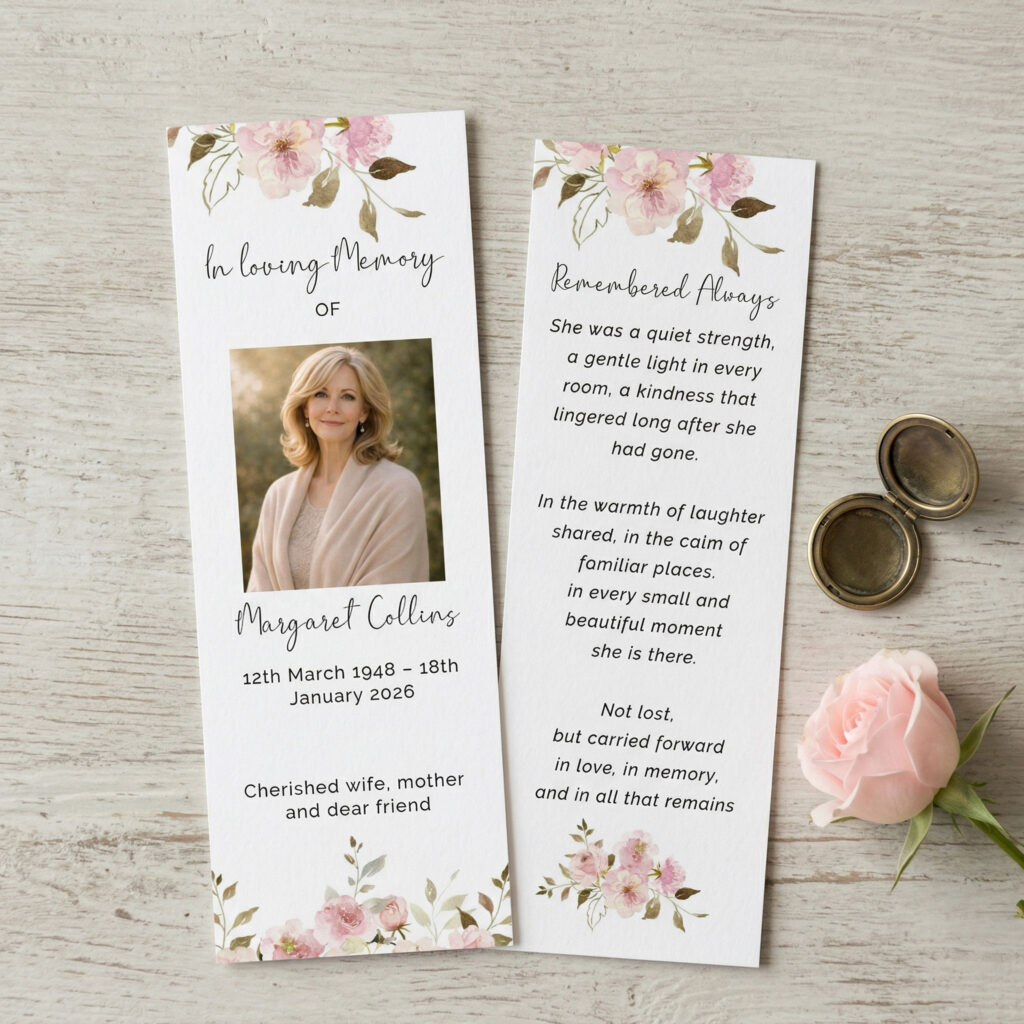
*Memorial cards or bookmarks for guests to take home as a keepsake
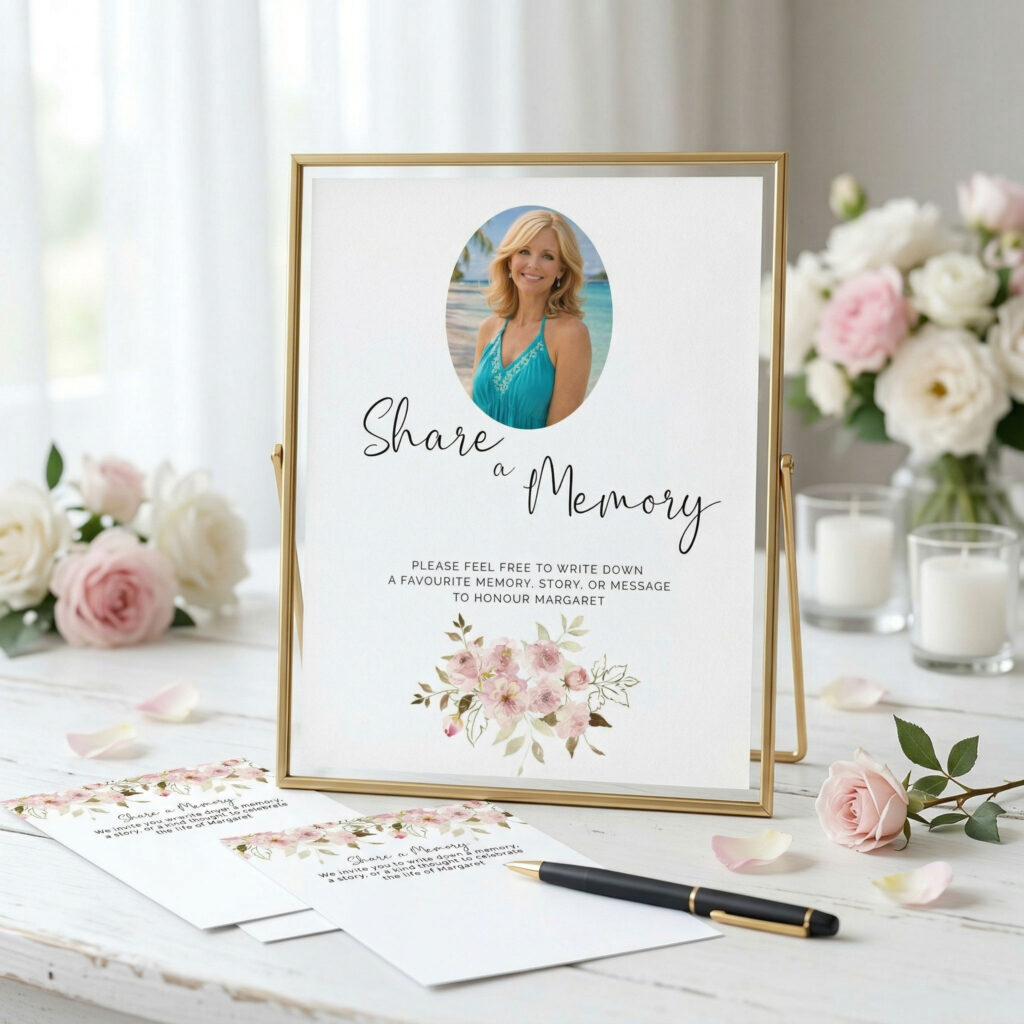
*Memory cards on tables, inviting guests to write down a favourite moment
*Thank you cards, sent in the weeks after the gathering to those who attended or sent support
When these items are designed as a cohesive suite, with matching colours, fonts, and motifs, the overall effect is one of care and intentionality. It tells every guest that the person being remembered mattered enough for every detail to be considered.
2×6″
Planning a Celebration of Life: Where to Begin
The most important starting point is this: there is no right way to do it. Begin with the person themselves. What did they love? Where did they feel most themselves? Who made up their world? The answers to those questions will shape everything else, from the venue to the music to the design of the stationery.
It helps to have support. A celebrant can guide the ceremony itself. A florist who understands the tone you are aiming for can translate it into something you can see and touch. And for the printed pieces that guests will carry home with them, choosing a designer who takes the time to understand the person being celebrated, not just the details to fill a template, makes a real difference.
Grief is exhausting. The people planning a celebration of life are often doing so whilst carrying an enormous weight. Any part of the process that can be made simpler, warmer, and kinder is worth seeking out.
Beautiful Stationery for a Celebration of Life
At Isla May Evergreen, we create personalised stationery for celebrations of life across the UK. Every suite is designed around the person being remembered: their colours, their personality, their story. From the order of service booklet to memorial cards and keepsakes, each piece is crafted to feel intentional and genuinely theirs.
We work gently and at your pace, entirely by email or WhatsApp, so you can be in touch whenever it suits you. If you would like to talk about what we can create together, we would be honoured to help.
If you are planning a celebration of life, we have created a range of personalised stationery designed to feel thoughtful, calm, and true to the person being remembered.